How to Read a VIN Number: Complete 2026 Automotive Guide
How to Read a VIN Number: Complete 2026 Guide
Every vehicle manufactured today possesses a unique fingerprint. For automotive buyers, mechanics, and owners, understanding the exact origins and specifications of an automobile is a necessary skill. Learning how to read a vin number empowers you to uncover vital data about where a car was built, the engine type, and the production year. This guide provides a comprehensive walkthrough of the seventeen characters that make up this essential identification code.
When you master how to read a vin number, you gain a massive advantage during the purchasing process. You can verify the authenticity of a listing, avoid fraudulent sales, and ensure you are buying the exact trim level advertised.
What a Vehicle Identification Number Represents
A Vehicle Identification Number serves as the ultimate identifier for any car, truck, or motorcycle. Since the standardization of this system in 1981, global transportation authorities and manufacturers have relied on this code to track manufacturing details, handle registrations, and issue safety recalls. No two vehicles on the road share the exact same sequence.
The Seventeen Character Structure Breakdown
The international standard dictates a strict seventeen character sequence. This sequence contains three primary segments that group related data points together.
World Manufacturer Identifier (WMI)
The first three characters make up the World Manufacturer Identifier. This segment tells you the region, the country of origin, and the specific manufacturer of the automobile. The first character represents the nation. The second character identifies the company that built the car. The third character designates the vehicle type or manufacturing division.
Vehicle Descriptor Section (VDS)
Characters four through eight constitute the Vehicle Descriptor Section. Manufacturers use these five slots to outline the general characteristics of the automobile. This includes the model platform, the body style, the transmission type, and the engine specifications. The ninth character acts as a check digit, a mathematical value used by law enforcement and software systems to verify the authenticity of the entire sequence.
Vehicle Identifier Section (VIS)
The final segment stretches from character ten to seventeen. The Vehicle Identifier Section provides the exact production details of your specific automobile. It indicates the model year, the specific assembly plant, and the unique production serial code assigned as the car rolled off the line.
Decoding Each Character in Detail
To fully grasp the meaning behind the code, we must look at the specific data points each character provides.
Country and Manufacturer
As noted, the first character indicates the country. Vehicles built in the United States begin with the numbers 1, 4, or 5. Automobiles from Japan start with J, while vehicles from Germany begin with W. The second letter or number identifies the brand, such as T for Toyota or F for Ford.
Model and Engine Specs
Characters four through eight detail the platform and powertrain. If you are comparing two seemingly identical cars, checking this section will reveal if one has a larger engine or a different transmission system. Each manufacturer uses a proprietary internal coding system for this section, meaning you will often need a brand-specific lookup tool to translate these exact letters into engine displacements.
Year and Assembly Plant
The tenth character is arguably the most crucial for buyers, as it dictates the official model year. The system uses a rotating cycle of letters and numbers. For example, the letter L represents 1990, while the letter Y represents 2000. Numbers one through nine represent 2001 through 2009. The cycle then resets with letters. The eleventh character reveals the specific factory where the manufacturer assembled the automobile.
Serial Number
The final six characters, twelve through seventeen, represent the sequential production number. When the factory completes a car, it receives this unique serial digit. High numbers indicate a vehicle built late in the production run, while low numbers suggest an early build.
Examples of Decoding in Action
Consider a hypothetical code starting with 1G1. The number 1 shows the car was built in the United States. The letter G represents General Motors. The second number 1 indicates it is a Chevrolet passenger car.
If the tenth character is the letter R, you can determine the model year is 2024. If the eleventh character is the letter Z, it points to a specific General Motors assembly plant in North America. By breaking down the sequence segment by segment, a complex string of text transforms into a readable history.
Where to Locate the Code on Your Automobile
Finding the sequence is a straightforward process. Manufacturers place the code in multiple visible and hidden locations to deter theft and fraud.
The most common location is the lower corner of the dashboard on the driver side. You can view this easily by looking through the windshield from outside the vehicle. The second most common location is the driver side door jamb. Open the door and look for a printed sticker or metal plate near where the door latches.
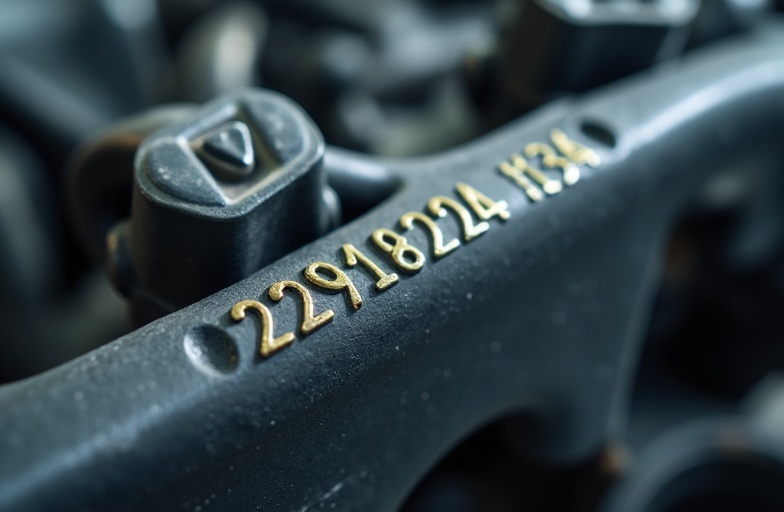
You may also find the sequence stamped directly onto the engine block, printed on the firewall under the hood, or etched into the metal frame of the chassis.
Essential Use Cases for the Identifier
Knowing how to read a vin number allows you to perform several vital administrative and safety tasks.
Vehicle History Checks
Before purchasing a used automobile, you must run a background check. Using the identification sequence, services can pull up accident reports, flood damage claims, and previous ownership records.
Theft Prevention
Law enforcement agencies rely heavily on these codes to recover stolen property. If thieves swap license plates, the identification sequence etched into the engine block and chassis remains the definitive proof of ownership.
Registration and Insurance
The Department of Motor Vehicles requires the exact sequence to register the automobile and issue license plates. Insurance companies use the data to calculate premiums, as the sequence confirms the engine size, safety features, and exact trim level.
Common Mistakes When Reading the Sequence
Human error is common when transcribing these codes. To prevent confusion, the standardized system entirely excludes the letters I, O, and Q. This ensures nobody confuses them with the numbers 1 or 0. If you see a circle shape in the code, it is always the number zero.
Another frequent mistake involves confusing the letter V with the letter U, or the letter S with the number 5. Always double check your transcription in a well lit area.
Tips for Verifying Authenticity and Avoiding Fraud
Fraudulent sellers sometimes attempt to clone a legal automobile by replacing the dashboard identification plate. To protect yourself, always compare the sequence on the dashboard with the sticker on the door jamb and the stamp on the engine block. All locations must match perfectly.
Look closely at the dashboard plate for signs of tampering. Scratches, loose rivets, or misaligned text indicate someone may have altered the code. Always verify that the physical characteristics of the car match the decoded information. If the sequence translates to a red sedan but you are looking at a blue coupe, walk away from the deal immediately.
Practical Advice for Buyers and Owners
Taking the time to verify this seventeen character code is the single most important step in the automotive purchasing journey. Whether you are hunting for a rare classic car or buying a reliable family commuter, the identification sequence tells the undeniable truth about the automobile. Always request the code from a seller before traveling to see a car, run a thorough background check, and cross reference the physical stamps upon arrival.